Race to the bottom

noway.jpg

By Warwick McFadyen

The minister was reflecting on . . .

I must say we are very lucky in this lucky country to have ministers who can pause, and reflect upon, upon matters. That they are able to do so while they are at work – that is, in the cauldron of federal parliament -­­ is even more commendable.

The speaker who observed that the minister was reflecting was none other than the Prime Minister Malcolm Turnbull. He was defending his Immigration Minister Peter Dutton.

Mr Dutton had merely made the point that a previous government, one led by a giant of conservative politics Malcolm Fraser, had made a mistake by letting people into the country who were Lebanese Muslims, and that now, a couple of generations, later some of their offspring – grandchildren and children – were reprobates. Of 33 people charged with terrorist offences, 22 were the rotten fruit from this 1970s mistake. These people were besmirching the good name of the Lebanese-Muslim community.

Mr Turnbull’s full quote, in response to a question as to whether he supported the point was this: “There is no question that there are lessons to be learned from previous immigration policies and the minister was reflecting on … policies many years ago. He’s entitled to do that.”

And just to elevate the allegiance to thralldom, he offered the observation: “Peter Dutton is doing an outstanding job as Immigration Minister.”

Well, he would say that, wouldn’t he?

Even allowing for that naked statistic, it is really of no more use than oiling the machinery on which far too many political and social groups try to drive their agendas. The merging of migration policy and malfeasance is contemptuous, but it is part of a broader picture of Australia that is not pretty. Indeed, it’s ugly, painted with strokes of spite, political opportunism, hypocrisy, a lack of decency and fair-mindedness. And above all, racism and xenophobia. Splash a bit of redneck patriotism onto the canvas, and there you have it. Welcome Down Under.

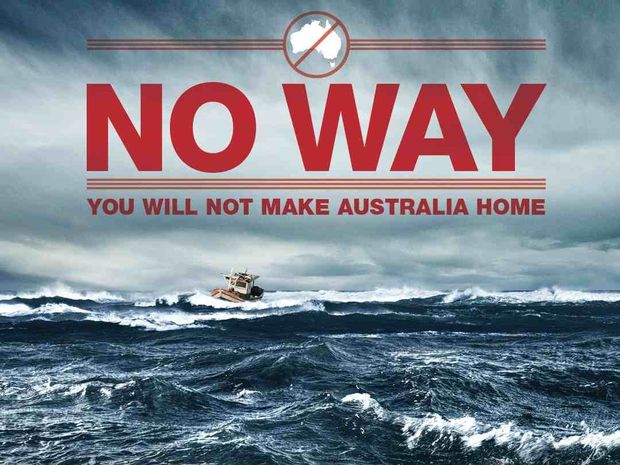
Governments play with refugees’ lives as if a sport. And Australia love its sport. Despite them not being criminals, they are treated so, and indeed have indefinite sentences imposed on them, such as the proposed lifetime ban on ever entering Australia, even as tourists. Just to illustrate how cracked this cup is, a report this week by a government-dominated committee found that “the ban would appear to apply a penalty on those who seek asylum and are part of the regional processing cohort.

“The right to seek asylum, irrespective of the mode of transit, is protected under international law.”

An “unlawful penalty” would be applied that breached the United Nations Refugee Convention.

Only recently the Prime Minister was exhorting Australia’s commitment to international law. Speaking of our offensive in cyberspace against Islamic State, he said the Australian Signals Directorate’s support . . . is subject to stringent legal oversight and is consistent with our support for the international rules-based order and our obligations under international law’’.

The concept of “our obligations under international law” is akin to Shakespeare’s view in Sonnet 116: that “Love is not love/Which alters when it alteration finds,/Or bends with the remover to remove:/O no; it is an ever-fixed mark.”

Australia’s international obligations are not in any sense true to the word’s definition; the only ever-fixed mark about them is the absence of a definition.

Peter Dutton says his point was that “we” and who the royal we is he doesn’t say, “should call out the small number within the community, within the Lebanese community, who are doing the wrong thing”. But why did he not perhaps append a note to his point and cut and dice every ethnic group in the cities and countryside and make a point about them, too, and their proclivities and engagements with police and crime? Everyone, after all, is a descendant of a migrant on this island.

Except one nation.

A representative of that nation, Indigenous MP Pat Dodson reacted to the “stupidity” of the language Mr Dutton used with this: “This is what words do – when you don’t understand and comprehend the difference between debate and prejudice.”

Into the mix came, of course, One Nation leader Pauline Hanson, who in a debate on free speech, said: “We are told time and time again that we must be tolerant.

“Well, I’ve had it up to here with my tolerance.”

This from the senator who said in her maiden speech to Parliament 20 years ago: “I believe we are in danger of being swamped by Asians. They have their own culture and religion, form ghettos and do not assimilate.”

And yet despite all, Australia is a multicultural success story. But these days, as ideology and bigotry and the truly nasty unedifying fight for righteousness and the moral high ground blazes, the thought keeps gnawing away, is that success on the surface or underneath it?

The national dialogue is now a shouting match. It has splintered into shards. It’s almost a bloodsport: the sins of the father versus those of the sons.

And we love our sport.

Warwick McFadyen is a freelance writer and editor


No more words from a master


trevor

By Warwick McFadyen

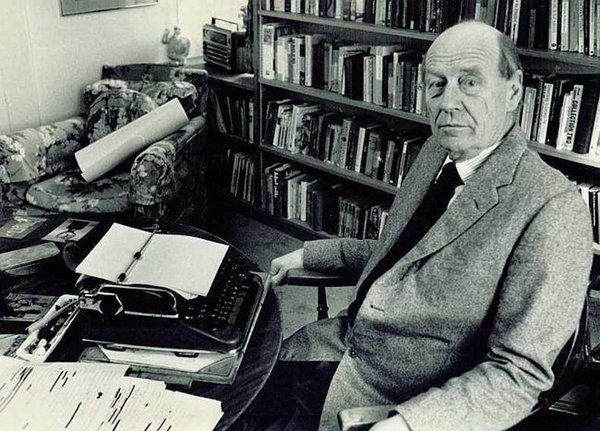
Death has come for William Trevor. He would, if he could look back over his shoulder, see nothing remarkable in that. He was, after all, 88. But even if he had been half that age, the writer still would have seen in it only the realisation of what life’s guarantees truly hold. Nothing.

Still, it is a time for mourning. And a time for farewells. For Trevor was one of the greats. If William Blake thought of seeing “a world in a grain of sand/And a Heaven in a Wild Flower. Hold Infinity in the palm of your hand. And Eternity in an hour’’, Trevor viewed it in the small things that occupy an hour, a day, a life.

He was the shadow in the room, the observer. The nature of people did not allow lives to be followed along a grand design. Life was too messy, too much balanced on the caprice of chance. He saw that, and he wrote of it.

He once told The New Yorker that he saw himself as “a predator, an invader of people”.  He could load a glimpse between two people, or a passing touch with the weight of any number of emotions: desire, humour, remorse, dread or guilt. It was to the latter that he was especially talented in pressing upon his characters. His novel The Story of Lucy Gault is an exquisite diamond-cut example. And he was prolific in doing so, having produced volume after volume of short story collections and novels. He won nearly every literary award except the Nobel Prize.

He was also part of a chain in the literary tradition of his home country Ireland: the native son who moves away, and then writes of home. He spent most of his life in Devon, casting his eyes across the sea to the cities, villages and homes of his birthplace, and of his adopted home, to bear witness to the life and death struggles that play out in ordinary circumstances.

Trevor’s particular gift was in writing of such things without explicitly naming the many terrors that lived beneath the surface. He could hold you in thrall to his words because he wrote to the heart. You turned the page, as I have done over hundreds of his pages, to see not where the next explosion has occurred, but to go ever deeper into the lives of strangers. For Trevor made fiction real.

Cynthia stumbled off, leaving a silence behind her. Before it was broken I knew she was right when she said we would just go home, away from this country we had come to love. And I knew as well that neither here nor at home would she be led to a blue van that was not quite an ambulance. Strafe would stay with her because Strafe is made like that, honourable in his own particular way. I felt a pain where perhaps my heart is, and again I wanted to cry. Why couldn’t it have been she who had gone down to the rocks and slipped on the seaweed or just walked into the sea, it didn’t matter which? Her awful rigmarole hung about us as the last of the tea things were gathered up – the girls who’d fled, the famine, and the people planted. The children were there, too, grown up into murdering riff-raff.

Beyond the Pale

Warwick McFadyen is a freelance writer and editor
 

An Australian voice stilled

mcdonald
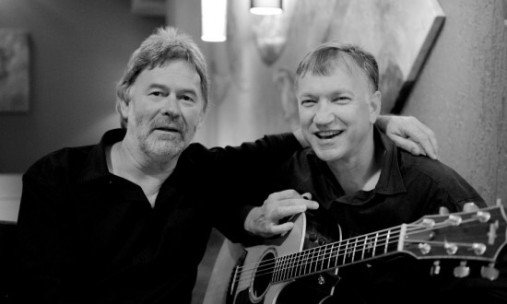
Hugh McDonald, right, with John Schumann.

By Warwick McFadyen

Some days, out of the blue, a star will fall from the sky and land at your feet. You’ll look at the crater before you. The star will be there no more, just the space it’s gouged out of the earth, and you’ll look to the sky and see a tear in the blue marking its path. Such a star fell this morning.

The name of the star was Hugh McDonald. Unlike the brittle lights in the galaxy of celebrity, McDonald was part of the oft-neglected, unknown, scarcely remarked upon choir of voices that sing of country, of character, of the essence that creates the entity that is Australian.

McDonald’s death from cancer, aged only 62, feels like a death in the family. I didn’t know him. I have over the course of the years interviewed his friend and musical partner John Schumann, and yet this news has set off a mourning such as a tuning fork within might resonate to waves of tragedy. I can only put this down to the power of the song. When words and music enter your mind and body, if they strike a chord, they become part of you. Sometimes quiet residents, sometimes not. Hugh McDonald’s work lived, lives, within me. For that I am thankful.

On news of his friend’s death, John Schumann posted this: “Most people will know by now that my dear dear mate, music accomplice, wingman and backstop for more than half my life, Hugh McDonald, died last night after a long, courageous and inspirational battle with cancer.  You get a mate like Hugh once in a lifetime – if you’re lucky. I was blessed – we all were. More later when my screen doesn’t look like a fish shop window from the 1950s.”

ifyoudontThe pair came together in Redgum, and perhaps more than any other band, they sang of Australia, its soil and soul, its life in the cities and in the outback, its history, its politics. They were, out of laziness by some labelled a protest group, but their ethos ran deeper than that. They dug into the cultural and political and held up to the light the stones most would have preferred buried. Their first album was called If You Don’t Fight You Lose. It was a marker, from which they expanded with subsequent albums. They questioned. They were not afraid to sing out. They were a breath of fresh air.

They had their greatest success with I Was Only 19 (A walk in the Light Green) in 1983. It went to No.1 and had a profound effect on how this country saw its Vietnam War veterans. Schumann and McDonald continued their associations with Australia’s armed forces, performing and in helping veterans after the war is over. Schumann left in the late 1980s and the band ceased in 1990, but the pair reunited in the Vagabond Crew and in later years performed together. McDonald released several solo albums, had a recording studio in Melbourne and taught music. One of the albums was The Lawson Album, based on the works of Henry Lawson. (Schumann did similarly.)

If I had to play songs to people overseas songs that contained a meaning of being Australian, McDonald’s Diamantina Drover would be one. It carries within its words and landscape of melody and harmony, an evocation that is both singular and universal. It has a rough, loveworn feel to it. It has the wide horizon and the close emotions that shape us. It is a thing of beauty.

So a star fell this morning, and as I type I’m listening to this:

For the rain never falls on the dusty Diamantina
And a drover finds it hard to change his mind.

Thanks Hugh.

CODA: A selection of versions of Diamantina Drover, from Redgum, Nancy Kerr and James Fagan, John Schumann and Hugh McDonald, and Christy Moore, with Enya on backing vocals.

https://www.youtube.com/watch?v=DeLfmrnIjBs

https://www.youtube.com/watch?v=FAULK-QJzJE

https://www.youtube.com/watch?v=GoWJWEr7DO4

https://www.youtube.com/watch?v=jejtvP_pwCk.

Warwick McFadyen is a freelance writer and editor

The Evolution of Ignorance

sistine_chapel-620x412

By Warwick McFadyen

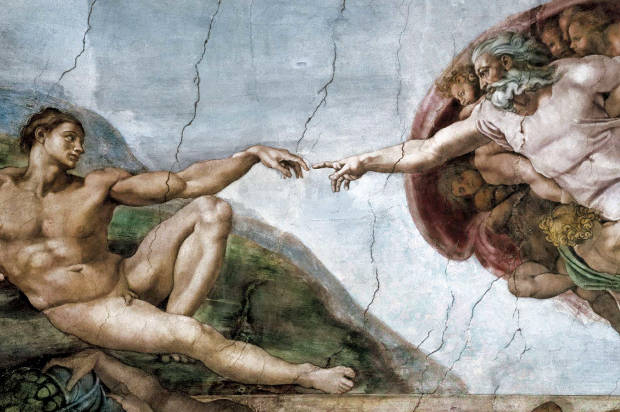
The point which you raise on intelligent Design has perplexed me beyond measure … I am in a complete jumble on the point. One cannot look at this Universe with all living productions and man without believing that all has been intelligently designed; yet when I look to each individual organism, I can see no evidence of this.

Charles Darwin in a letter to astronomer John Herschel, 1861.

One of the difficulties in raising public concern over the very severe threats of global warming is that 40 percent of the US population does not see why it is a problem, since Christ is returning in a few decades. About the same percentage believe that the world was created a few thousand years ago. If science conflicts with the Bible, so much the worse for science.

Noam Chomsky, 2016


It is the grand delusion, this faith in progress. Yes we live longer; yes, we’ve eradicated diseases that once used to ravage millions; yes, we’ve brought instant communication around the world and back again in the blink of an eye; yes, we have created virtual reality when the real thing isn’t enough for us.

Yes, we can. As a slogan it was inspirational. It helped deliver an African-American to the White House in a country with a history in many regions of slavery, segregation, murder and bigotry. It was historic moment. It may have opened the doors to what was possible in life – a concept that would have been impossible only decades earlier. But in its success resided also the delusion. There is no royal we. The centre cannot hold when it is fragmented.

George Monbiot in The Guardian http://tinyurl.com/hkbom5x wrote recently of the ghost in the global machine. It is not known by name. It started as neoliberalism but now has conquered the workings and mindsets of economies, corporations and politicians by its invisibility, in effect its rhythm of the one and only true normality. To go up against it is to be a dissenter of the good and great.

It is the markets’ equivalent of Intelligent Design.

The election of Donald Trump, and his bringing forth of like-minded assistants to his cause is the manifestation of an ideology that on the surface is appealing (patriotism, no foreigners, protection of jobs) but which at core has been hollowed out by an ignorance that would do the Dark Ages proud.

Even taking Trump out of the equation America now has in  vice-president Mike Pence, a man who does not believe in evolution, who is in essence a de facto creationist, and  Myron Ebell, the head of the Environmental Protection Agency transition team,  one of the world’s foremost climate deniers.

In 2012, Trump tweeted: “The concept of global warming was created by and for the Chinese in order to make U.S. manufacturing non-competitive.”

In 2015, Trump thought the warming  might be all a hoax.

This week the Chinese have come out and said, well no, we didn’t.

So, this is going forward? Two of the most powerful men in the US, nudging shoulders with the commander in chief of the most powerful country on the planet, and one denies evolution and one denies climate change.

In 2002, Pence spoke to the House of Representatives on Charles Darwin. Pence thought that Darwin “offered a theory of the origin of species which we’ve come to know as evolution. Charles Darwin never thought of evolution as anything other than a theory. He hoped that someday it would be proven by the fossil record but did not live to see that, nor have we.”

Pence, an arch conservative in other areas such as abortion, also believes creationism should be taught in schools alongside evolution. There is no earthly reason to do so. One is science. One is nonsense. There are no parallel lines of argument. One is true, the other is not. Pence can, of course, believe in God, he can believe the universe was built in six days and that God, outside that universe, then had a rest. He is not alone. Many polls in the US show his views are not uncommon. But what takes this to another level is the position he now occupies. He now has influence. How much personal belief seeps into public duty? Indeed, can there be separation?

It would be funny if it were not so serious and depressing, but there is a dark paradox at play now in the corridors of Washington. It is this: this administration trumpets a fossil-fuel energy future. But what a minute, fossil fuels? Fossils? From millions and millions of years ago? Surely not. God, and Republicans, work in mysterious ways.

In Scientific American, Carolyn Porco, Cassini Imaging team leader, wrote: “My deepest worry is that this transition really could signal the end of the American Republic and the light it tried for 240 years, at least on paper, to shine on all the world.

“What it means for the practice of science in this country, the rights of women and minorities, the future of our planet’s health, the survival of all creatures with whom we share the Earth and for our relationships with other nations, I have no stomach to predict.

“But it does very much seem right now that the winning faction of the US populace has decided that the Earth really is flat, and that will be the guiding principle for governance from this moment on.”

And what did sailors fear when they sailed too near the horizon? They would fall into the abyss. We are too modern for that now. We know the world is a globe. It just seems the light has gone out.

Warwick McFadyen is a freelance writer and editor

Competing priorities

melbbeggarBy Warwick McFadyen

I guess one should applaud Daniel Andrews for his government’s gift to the city’s homeless. On Saturday, the Premier announced that $109 million would be provided over five years on measures to tackle homelessness.

But that sound you cannot hear? That’s the sound of one hand clapping. For sure, some money is better none, and that some acknowledgment of the crisis is better than none at all, that some words of empathy and understanding are better than none at all.

The crisis of men, women and children, bedding down in lanes, doorways and under bridges, is not being ignored. But neither is it being treated with the seriousness it requires.

You gauge the moral centre of a society and its government by its actions, and its actions are driven by the priorities placed upon them. And priorities are, by definition, relative. Governments always moan of competing priorities, and yet stay quieter on competing interests.

Let’s place two state government (of either hue, Labor or Liberal/National) priorities side by side:

The Melbourne Grand Prix and homelessness. Is it a simplistic exercise? Yes. Is it comparing of and in themselves oranges and apples? Yes. Is it any less worthwhile an exercise? No. The aim of ruling successfully may be the supply of bread and circuses to the masses, but surely some bread is worth more than some circus entertainment. Let’s not kid ourselves that the grand prix circuit is anything but entertainment.

The state government is now throwing about $60 million annually at the Melbourne grand prix, and it will do so until 2023.

Extrapolating from that, here’s some simple figures:

The circuit is 5.3 kilometres around Albert Park Lake.

The race is run over 58 laps, totalling 307.57 kilometres.

It lasts roughly 1 hour and 48 minutes.

On the money the government gives, purely on the cars going very fast, it works out like this:

58 laps = $1,034,482 a lap

307.57 km = $195,077 a kilometre

1 hour 48 min = $555,555 a minute

And many times, not all the cars finish.

There are, of course, reports upon reports, defending the race, saying it promotes Melbourne’s branding, its profile nationally (Hey you in Darwin, down here, we’re called Melburnians) and internationally (similarly in Berlin or London). That basically it puts this city on the map, brings the dollars, brings the people. This is a truth, but it’s not enough of a truth to justify its existence. Indeed, it most recently posted a $61 million deficit.

No doubt, when the race is held over those 108 minutes in March, if the engines scream like demented mutant mosquitoes, the homeless among us, in their life without rooms and windows will hear the sound of a government branding excelsior.

It will do little to leaven their daily load, to know that the gift Daniel Andrews bestowed at the weekend of $109 million over five years works out at $1147 a person a year.

That’s $3.14 an hour. How much was the race per hour? $33,330,000.

Seems fair.

Andrews on Saturday spoke of the “fundamental human right to shelter and the assistance you need to get through those tough times and back on your feet”. More than $10 million would go towards those under 21 for accommodation needs and $60 million on building or supplying accommodation. His Housing Minister Martin Foley raised the number of 19,000 as a “figure that the world’s most livable city needs to really ponder – that some people can’t afford to live in it.”

Yes, minister.

The City of Melbourne in a survey mid-year found that the number of people on the city’s streets had risen three quarters in two years.

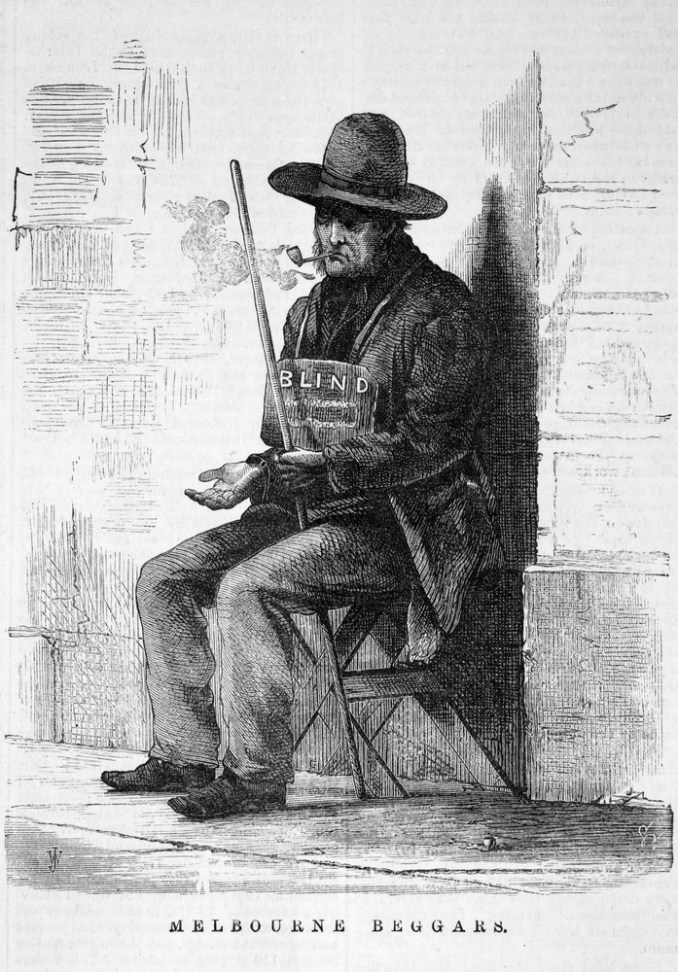
Anyone who walks these streets can see this rise. They see the cardboard signs, the small, handwritten notes of a life, they see a few coins.

They see lives racing to a conclusion without dignity.

Warwick McFadyen is a freelance writer and editor

Donald Trump’s hair claims victory

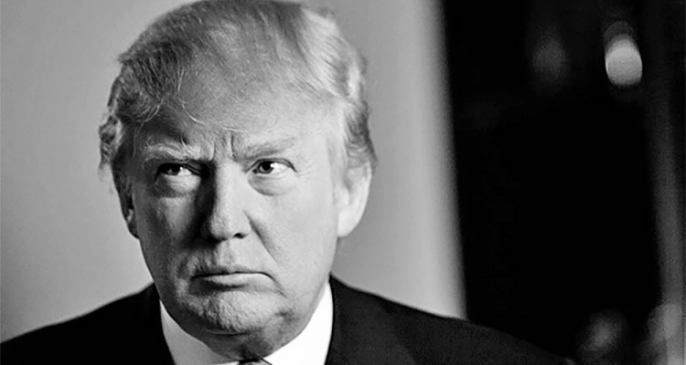
trumphairYou people deserve me. Day in, day out, I have been showing you the glories of my waves, and now, come the hour, you have granted me the highest honour. I salute you.

You have bestowed greatness upon this country, of making it great again. You have vanquished mediocrity. The conventional look. Gone. The sensible part. Gone.

I will now make you in my image. I will lead you into the world, my follicles, and together we will show the lesser strands of life who is the master. The ones who are not us. They will be sculpted to my will. They will quail before my coiffure.

For none have the wildness, the virility, that I possess. Isn’t that why you love me?  That I am not like others. I even changed colour for you in my evolving. What greater sacrifice can there be in America?

The one who stands below me once said:

“What I do is, wash it with Head and Shoulders. I don’t dry it, though. I let it dry by itself. It takes about an hour.  I then comb my hair. Yes, I do use a comb. Do I comb it forward? No, I don’t comb it forward. I actually don’t have a bad hairline. When you think about it, it’s not bad. I mean, I get a lot of credit for comb-overs. But it’s not really a comb-over. It’s sort of a little bit forward and back. I’ve combed it the same way for years. Same thing, every time.”

Same thing, every time. I have been among you for years. Am I not the supreme individualist to which you all aspire? I travelled the length and breadth of the country, attending to your needs and desires for a new model, a new style.

I have lost count of the halls, conference rooms, outdoor stages where I have held you all in thrall, holding fast against the elements and rages of my enemies. I defied them all. I ma beyond their puny definitions, of what is right or what is wrong.

And now, I can feel the winds of change, coursing through my very being. The roots of power are with you, my friends. I will not let you down.

Before this great moment, I said: “If we don’t win, this will be the single greatest waste of time, energy and money in my life.” But it has been the single greatest use of my time, energy and money. No one can give me the brush-off now.

Every minute of every day, I presented myself to you. Such was my potency that news magazines did graphics on the mechanics of my existence. I was compared to the finest in nature: the South American Flannel Moth caterpillar. Experts were brought in to dissect my shape and form.

But you, a grateful people, have nourished my ambitions. Let my opponents comb the wreckage of their defeat for answers. I am the force that cannot be stopped.

I am no longer the hair apparent. I am hair! Forever!

As transcribed by Warwick McFadyen, a freelance writer and editor

The Lost Child

wp_000622-3


By Warwick McFadyen

Let us take one child, a boy or girl, it doesn’t matter, perhaps under the age of 12 and let us abandon him or her with the insouciance of a king who sees life only as a realm. One who sees lives only as the material for his defence.

One child is enough. Though we could take 100, for effect, to amplify the conditions and the consequences of those conditions. But let us go the other way and take merely one and drive those conditions into the one, as a screw into a piece of wood. Even if by a miracle the screw is removed from the wood, the hole filled with putty or words, the rending of the wood, the splintering will remain. The wood will never be the same.

The child will not die. And yet, he or she will not live as you and I know life. Years will pass, birthdays will come and go. There is no executioner, and yet the child knows the sight of guards and wire, sees them every day. He or she lives with this unknowingness: the face of the man or woman who put her or him there.

Where is the hand that signed the paper? Where is the voice condemning him or her to limbo, on an island, far out to sea, away away away from hope. The ocean does not speak; the sky does not answer.

The child may have begun asking, Am I a monster? Am I evil? In a child’s mind such thoughts can blot out the sun, and in the fear of such darkness, he or she might harm themselves to harm their shadows. Still, it will not be enough to return light to the child’s world.

The child does not know that he or she really is an unseen crime, and such a thing to a king is a prize worth preserving and fighting for. The child does not know he or she is a threat to national security. The child does not know the border’s protection quails at his or hers existence. How could he or she? After all, a child is just a child.

Far away from this abandonment, on the main land, the fading mythical land, life goes on. The king is not really a king, but a machine. This machine is called government. People come and go within it, steering it this way and that, going forward, reversing, speeding up and slowing down, stalling and restarting. It likes to think itself a civilising influence. It is, after all, shaped and remodelled every few years by the people of the land.

And the abandonment of a child is part of the machine. Beyond the horizon, this inhumanity is shaping our soul, the way a hammer shapes the hand, to quote Jackson Browne.

The abandoned child only wanted asylum. A new life. He or she is not the monster. When a crime becomes seen as the norm then the monster resides not there but here. Let Polish poet Zbigniew Herbert have the last words. Let us take one child.

Mr Cogito’s Monster

1


The lucky Saint George

could judge the dragon’s

strength and movements

from his knightly saddle


strategy’s first principle

size up the enemy well


Mr Cogito’s position

is less advantageous

he’s seated in the low

saddle of the valley

wrapped in thick fog

in the fog you can’t make out

the burning eyes

the greedy claws

the maw


in the fog

you see only

the flickering of nothingness


Mr Cogito’s monster

lacks all dimensions


it’s hard to describe

it eludes definitions


it’s like a vast depression

hanging over the country


it can’t be pierced

by a pen

an argument

a spear


if not for its stifling weight

and the death it sends

you might conclude

that it was a phantom

a disease of the imagination


but it’s there

it’s there all right


it fills crannies of houses

temples bazaars like gas


it poisons the wells

destroys a mind’s constructs

covers the bread with mould


proof the monster exists

is offered by its victims


indirect proof

but sufficient


2


the sensible say

you can coexist

with the monster


just try to avoid

violent gestures

violent speech

when threatened

take on the form

of a stone or leaf


obey wise Nature

who urges mimicry


breathe shallowly

play we’re not here


Mr Cogito however

dislikes living as-if


he’d like to fight

the monster

on solid ground


so he goes out at dawn

to the sleeping suburbs

intrepidly fitted out

with a long sharp object


he calls to the monster

through empty streets


he insults the monster

provokes the monster


like the daredevil scout

of a non-existent army


he calls – 
come out you dirty coward

through the fog

you see only

the huge mug of nothingness


Mr Cogito wants to

join the unequal fray


this should happen

as soon as possible


before he is felled

by powerlessness

common death without glory

suffocation by shapelessness.

Warwick McFadyen is a freelance writer and editor


Dylan’s Nobel calling

dylanBy Warwick McFadyen

Bob Dylan deserves the Nobel Prize for literature. What critics seem to miss is a fairly basic point. Bob Dylan writes words. He has for more than 50 years. That he then puts those words into song is, really neither here nor there.

Harold Pinter won the Nobel in 2005, and his words go into the mouths of actors who then perform them on stage. They are meant to be performed. Similarly with Dylan, only there is only one actor, the creator himself.

The award was given “for having created new poetic expressions within the great American song tradition”. No one in this universe or any parallel one could argue with that.

He forged a new language, out of a love of language. To do this he had to break the mould of what a song was, and is. If he had not continued creating and performing for more than half a century than surely his canon of the sixties and into the seventies would have been enough.

The Freewheelin’ Bob Dylan (1963)

The Times They Are A-Changin’ (1964)

Another Side of Bob Dylan (1964)

Bringing It All Back Hone (1965)

Highway 61 Revisited (1965)

Blonde on Blonde (1966)

John Wesley Harding (1968)

Blood on the Tracks (1975)

Desire (1976)


And just a few songs from those albums would make any poet envious: Girl from the North Country, Masters of War, A Hard Rain’s A-Gonna Fall, With God on Our Side, Ballad of Hollis Brown, Only a Pawn in Their Game, The Lonesome Death of Hattie Carroll, Chimes of Freedom, My Back Pages, It’s alright Ma, (I’m Only Bleeding) Like A Rolling Stone, Desolation Row, Visions of Johanna, Stuck Inside of Mobile with the Memphis Blues Again, Sad-Eyed Lady of the Lowlands, All Along the Watchtower, Tangled Up in Blue, (the whole of Blood on the Tracks, actually) Isis, One More Cup of Coffee, Sara.

And there’s still another three decades to go . . . Let’s throw in the album Time Out Of Mind to seal the justification. Or perhaps, the Pulitzer or the Presidential Medal of Freedom or the Polar Music Prize or the National Medal of Arts or the Commandeur des Arts et des Lettres.

How anyone could be so blind as Anna North in The New York Times could be to write “by awarding the prize to him, the Nobel committee is choosing not to award it to a writer, and that is a disappointing choice”.

What was Dylan doing then, making hubcaps? North goes on to say, yes, he is a “brilliant lyricist . . . he is great because he is a great musician”. But a writer? Tut tut no. There are none so blind who will not see, Ms North.

Others have also criticised the award, such as Irvine Welsh who thought it was given by ageing hippies as an “ill-conceived nostalgia award”. Others thought it a “gimmick” and an insult to the thousands of other very fine writers in the world. Who should award it then of not the committee. Should we have a referendum, a postal vote, worldwide?

As to the thousands of other fine writers,  when they’ve been on the creative wheel for half a century and produced, and reinvented an artform, perhaps it will be their turn, all 10,000 of them.

Bruce Springsteen has written of Dylan that he is the “father of my country”. Shane Howard says of Dylan’s work that “he gave jobs to us all” meaning he opened the doors to the possibilities of chiselling away at the rock of ages for aspiring songwriters.

Disillusioned words like bullets bark
As human gods aim for their mark
Made everything from toy guns that spark
To flesh-colored Christs that glow in the dark
It’s easy to see without looking too far that not much is really sacred.

Dylan takes words from the earth, the streams, the rough shadows of humanity and makes them glisten. It’s the poetic edge. Before him, there was nothing. Now, there is a world of words and music boundless. That is his genius. That is his gift. That is why he has the Nobel.

Warwick McFadyen is a freelance writer and editor

CODA: This a link to a piece I wrote on Bob Dylan’s literary influences and ambitions in 2004 for The Age newspaper:

http://tinyurl.com/hk7wpmw


The narrow man

donald-trump-750x400-2

By Warwick McFadyen

After the roiling storm over the disclosures of Donald Trump’s attitude to women and the fallout in Republican circles – and a pre-debate press conference where Trump sat among accusers of Bill Clinton – the second debate came and went in a series of wind gusts. Each side blowing hard against the other. Attack v counter-attack and so on and so forth.

The more illuminating moment stills echoes from the first debate.

It is about time that this country had somebody running it that has an idea about money.

Donald Trump, first debate with Hillary Clinton

And really, there you have it. What supreme irony that it now emerges that he did not, in effect, pay taxes for 18 years. It is worth quoting The New York Times recent exclusive:

‘’Donald J Trump declared a $916 million loss on his 1995 income tax returns, a tax deduction so substantial it could have allowed him to legally avoid paying any federal income taxes for up to 18 years, records obtained by The New York Times show.

The 1995 tax records, never before disclosed, reveal the extraordinary tax benefits that Mr. Trump, the Republican presidential nominee, derived from the financial wreckage he left behind in the early 1990s through mismanagement of three Atlantic City casinos.’’

After the clamour of that first presidential debate, and the hiss of this latest, the residual hum in the background is emanating from that one sentence, and this revelation, from Donald Trump. It seems innocent enough, possibly even legitimate, but it goes into the heart’s dark chambers of the man. With Trump the deal and the national spirit are one and the same thing. He equally salutes the flag and the dollar.

When he declares that he wants to make America great again. He means great again to do business. And, at first glance, this is good. Booming business means jobs for Americans, greater profit, greater prosperity for all.

Ronald Reagan made the same claim in his presidential campaign more than 30 years ago when the US was wrenching itself out of stagflation and the oil crisis and myriad international fiascos in the Mid-East and Central America.

But here’s the thing, Trump trademarked the slogan. That’s the difference between Trump and the rest of the world. Trump’s impulse is to protect Trump, promote Trump, make sure that Trump by whatever means comes out on top. Everything else is secondary. While a bankruptcy to most people is financial hell, to Trump it is grist to the mill. And he has had many and he will say that is what is so great about America, you can bounce back. Well, he can, not the hoi polloi. And he wants to make it greater.

Each day seems to bring new shocks, but really it shouldn’t. Many see the latest disclosures from the sex tape as a tipping point. Many leading Republicans who had given him support now have publicly censured him. He is odious and, in Robert De Niro’s words, a “bozo”. But still his defiance is born and propelled in the malformed creature that lives with the two hearts of money and power.

Millions upon millions of words have been written and said about Trump. His character and his ethics have been investigated by journalists and authorities, his values forensically examined. It’s come to the point that a beggar in New York, as writer Garrison Keilor relates, can make a fortune by saying, “Give me a dollar or I’ll vote for Trump.’’ His hat was overflowing as people laughed and acceded to his threat/demand.

But it’s no laughing matter.

History can be a hard teacher. After the dignity, statesmanship and decency of Barack Obama, the first African-American to be president in a country that used African-Americans as slaves, is it possible to go backwards? Yes, it is. The progression of human nature is not linear.

America was great when it elected Obama. For Trump to bellow that he wants his countrymen and women to vote for him to make America great again is an insult not only to Obama but it is a kick in the guts to the nation, he allegedly loves himself. Trump only loves that part of the country that can help him or build on his ideal, sorry prejudices, of what that country should be. His raison detre is to exclude, not include. His is a narrow soul. There simply is no room for the tide and complexity of humanity.

Hence his frothing at the mouth at outsiders. Hence his self-proclaimed swagger that he has a permit to carry a concealed weapon. Hence, his bullying bravado that the word of Trump will, like the trumpets at Jericho, cause the walls of his enemies to crumble and fall down.  Historians believe that that account from Joshua in the Bible did not occur. Trump should take note of the facts, but he won’t. They’re inconvenient, “bullshit”, in his own words, just like climate change.

The fallback position of clear-sighted people that “reason will prevail’’ come polling day in November isn’t supported by history. Reason is one of the first casualties, along with truth, along the road to war and other catastrophes.

And here’s the other thing about Trump and achieving greatness; to do so to his ideal is to embark on a cleansing of the waters. The dark currents of ethnicity and Islam, for instance, need to be purged. How will he do it? Well, that’s easy. The overwhelming force of his personality will prevail. The sheer will to power. Nietzsche would love him, then laugh at him.

If only this were a reality show. Oh yes, sadly, it is.

Warwick McFadyen is a freelance writer and editor