Winter Is Upon Us

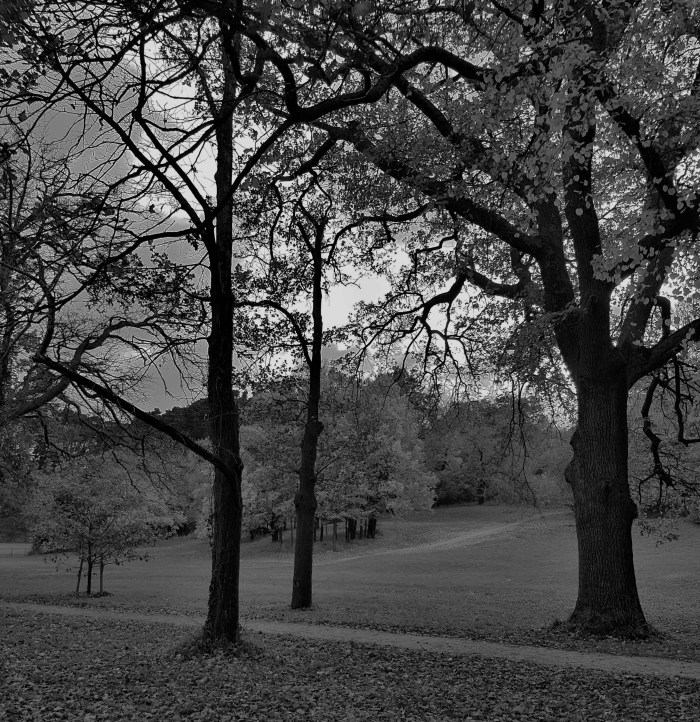
20170527_080604 (3)


The last whispers of autumn

Are teasing the leaves

Still clinging to the trees.

The fallen are already

Being mulched underfoot.

The light that bore summer

Within it is fading

And reforming;

Less of the sun,

More of the moon.

Like a tide going out

And returning,

Ice-capped:

Winter is upon us.


Residing within

The turning days

That move through

Blood, flesh and bone.

At times, rising as a storm

Carrying bruised clouds

Or settling as a frozen pond

At the bottom of the still heart.

A guest that cannot be turned away.

The chill air slaps our senses awake;

We fold warmth into our hands,

Blow on them to keep it alive.

In a darkened season, in this

pale light, we look for a path.

Warwick McFadyen

This is What War Does (Collateral Damage)

220px-Sépulcre_Arc-en-Barrois_111008_12

I have had enough
of the war.
It is going badly,
as all wars do.

I have had enough
of shaking
ash off tree limbs
into my garden.

I have had enough
of unknown
children’s faces looking
in my house.

I have had enough
of their deaths,
wan bodies breeding
ties familiar.

This is what war does:
warm blood turns
cold, and life turns in
a reptile’s eye.

Warwick McFadyen

The Fairness Myth

Dollar_symbol


By Warwick McFadyen

Fairness, like beauty, is in the eye of the beholder.

We kid ourselves if we believe it has an objective universality.

Fairness is the car you drive to take you somewhere where you want to go. You only get in when it’s to your advantage. It’s not called the altruism model; it’s called the turbo self-interest. When it suits the circumstances, it’s given a polish and paraded down the boulevard of splendid dreams.

Two recent high-profile drivers have been Turnbull and Treasurer Scott Morrison. Proclaiming “fairness this’’ and “fairness that’’, both have been revving the engine, a little bit here at the traffic lights, a bit on the highway, in the carpark. It serves two purposes: to show people they are putting their foot down on accelerating fairness, and enriching their political fortunes by allowing others to believe them.

The tragedy might be that they believe what they say. Actually, to justify the effort involved, they must believe it. Otherwise, it makes a farce of both deed and word. And these blokes are not clowns.

In November 2015, Turnbull was selling tax reform. He managed to be both clear-sighted and blind. Or to go back to the car, he was, in effect, taking his foot off the pedal and then without knowing it letting it slip back down.

In one interview, he said: “Fairness is absolutely critical. Any package of reforms which is not and is not seen as fair will not and cannot achieve the public support without which it simply will not succeed.”

In another he said: “Fair is obviously in the eye of the beholder and people have different views on it. I think for Australians, fair means the burden of tax is borne by the best able to pay it. It’s a question of judgment.

“The test of whether any set of measures is fair is going to be whether people look at it and say, yep, that seems fair enough.”

Ah me o my. Fair speech may hide a foul heart, as Tolkien wrote. It may also hide a heart of stone.

Crudely, fairness comes down to priorities. Priorities come down to equations. Equations come down to numbers. Numbers equal votes. It’s the only equation that matters in this constant election cycle. Do the maths.

If as Paul Keating says when you change the government, you change the country, then what exactly is the country? If then its natural state is flux then the prime movers of fairness are impossible to define.

Of the recent budget, Turnbull said it would “be committed to fairness, opportunity and security. Ensuring that Australians are given the opportunity to get ahead, the economic growth that enables them to get ahead, to get a better job, a better-paying job, to start a business, grow a business, to realise their dreams.

“We’ll also deliver the security and the assurance, national security, we’ve been talking about, but also the security about essential services and essential government services – education and health.

“But above all, this budget will be a thoroughly fair budget. We are the nation of a fair go, it’s in our DNA and our budget will reflect that.”

Say it often enough and the lie becomes fact. So it is with fairness. What is true is that the more money you have, the fairer things become. The fair go is really a chimera. We are fed the mirage that the fair go can be seen and grasped – a dream wrapped in good honest work clothes. Try shifting the concept between economic stratum, those clothes get caught on the floorboards. The will to power trumps the will to selflessly help those less fortunate.

Those on welfare, in the framing of political discourse in this country, are criminals, ne’er-do-wells who have to justify their straitened circumstances to receive something, anything, to get by. Such has been the relentless use of “crackdown” to describe the treatment of the vulnerable that it has lost its tawdry and despicable connotations. A government is cracking down on those who are at the bottom of the pile? It is shameful.

As Michelle Grattan wrote: “As in all Coalition budgets, those on welfare get a kicking.”

Ben Spies-Butcher, Senior Lecturer in Economy and Society, Department of Sociology, Macquarie University, in The Conversation, wrote:There are harsh measures that include trials of drug tests, harsher breaching rules (that often leave recipients with no income), and even restrictions on accessing support for disabilities related to substance use.

“That reflects a very strong populist attack on some of the most vulnerable. It also reaffirms an important political dynamic in Australia: when we frame action for everyone (as we do with health, education and housing), it is much easier to achieve equitable action. And when action is focused on the very poor, the political instinct is to attack.”

No better example of this attack is to institute random drug trials for dole recipients. So the welfare system morphs into the police state. Three strikes and you’re on your own. And then what happens? Morrison and Turnbull are fond of the expression “mutual obligation”. It’s an easy way to wash your hands of a bigger problem. There is no fairness when one side holds the sledgehammer.

And the thing is, the hammer shapes the hand.

What is the most bombed-out, moonlike cratered piece of land in Australia? The moral high ground.

This fabled plateau offers dominion over the hordes below, those hapless, helpless souls who can neither see what should be obvious or heed the clarion calls of those on high. Pity their wretchedness.

A nation at one with itself would not be quarrelling over what its values, founded on a fair go should be. All now is dissonance. Some might call it robust debate, but it is not. It’s different scales, intersecting, and deaf to the other. There’s no grace notes of compromise of coming down a pitch or rising to meet another’s point of view. Ask the asylum seekers. Ask the Indigenous people across this nation.

The constant cacophony between voices across the political spectrum as to what constitutes Australian values shows that in truth there are no Australian values. Sure we can hold up mateship and giving everyone a fair go, but history shows otherwise.

Surely the place where examples of quintessential values of a nation would be in evidence is from what government does for its people. We are defined by our actions. Words, in the end, add up to nothing.

What values are defined in our treatment of our Indigenous people, asylum seekers, the homeless, the disadvantaged, those on foreign shores who depend on our humanitarian aid [which we’ve frozen, thus in effect cutting it] versus the colossal and obscene amount of money we spend (billions of dollars on submarines and Stealth fighters), in waging war to buddy up to allies, and in cementing the great dividing range of economic privilege?

What do we value most? That we’re all equal? We’re kidding ourselves.


Into you

11911419676_4d5e3bfb5d_k-9da79b34197887172a37ac24d906167df4404a5d-s900-c85.jpg

 
Click go the fears, boys,
click, click, click.

In time, terror will flow into you
like ink into a word
and define your life and how others
read you.
In time, beauty will betray you
with a kiss.
And the solstice will seduce you
to sleep in lamplit hallways.
In time, luxury will call you
to defend it;
and love will require you
to answer it.
In time, your voice will leave you;
and the tongue of your past
will utter nothing.
In time, the rim of your lips
will describe formlessness
where there had been none.
In time, exile will take you
into its fold.

Click go the fears, boys,
Click, click, click.

Warwick McFadyen

Into the Skin

Leonid_Meteor

We, who live without gods,

desire nothing

out of the ordinary:

a roof over our heads,

food on the table,

the good health of our children.

A small star falling onto the back

of our hand

would hinder our grasp of things.

We do not need signs from heaven.

For to hold one, no doubt a scar would form, which in time

might blend into the skin.

And so become a tale told to lighten

the order of nights stretching

into the wintering heart.

The sky is empty.

Gods are not our witness.

Warwick McFadyen

Red Dust

moon21b_wide-84a8c8445b783a22550f1874c17036039a9837e5-s400-c85


There’s red dust on the moon.

Some say it’s the particles

of a civilisation

that vanished before God

turned his attention to us.


Some say it’s the dust

that God shook off his great coat

after he had finished

arguing with himself.


Some say it began as the grand

thoughts of men

that fell derelict

to even grander

indifference.


Some say it’s the numbers

of infinity

broken

up

by the weight

of expectations.


I say it is too far away

to know

the dust’s first form

but this: it cannot rise

nor fall again.

Warwick McFadyen


The oak, the acorn, the gas

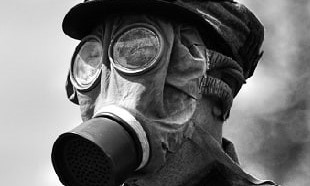
Gas-Mask (2)

By Warwick McFadyen

In the morning, walking under the oak trees, acorns fall in a slow random rain. There is no rhythm to it. One hits the earth with a pop, then another, several at once in a rolling thud thud thud, then none. Silence. The ground is strewn with acorns, a carpet of possibilities. Under the green canopy, the future of these acorns can be seen in the saplings and the mature oaks, the archaic torsos of bark and wood shaped by time and the elements.

This is the ecology of survival; this is life on earth, and this is me among the turning of the seasons, thinking of the colours of the day, of natural beauty and natural torture.

How many children had guns? How many children had grenades? How many children had bombs?

None.

None.

None.

How many children had their life before them?

All.

No longer.

Gas did them in. Those children of Syria. Their flesh was not ripped, their limbs were not torn. They breathed in the gas. And the gas did them in.

The gas was sarin. It was developed in Germany in 1938 as a pesticide. What an exquisite commentary on the barbarism now at play. It was created to kill bugs, non-humans. And that is now how it is viewed by those who use it. The targets are lesser humans than the ones with the missiles. Their lives are of no value. They are insects.

Sarin is colourless, odourless and tasteless. So in its first penetration you do not know it is within you. And then you begin vomiting or suffering diarrhea, you can’t see, you can’t breathe, you drool, you convulse, limbs twitch. You die.

It’s not the first time. Of course it is not. In 2013, sarin was used in Damascus. One thousand people died.

The Washington Post reported a victim’s reaction: “It just took seconds before I lost my ability to breathe . . . I felt like my chest was set on fire. My eyes were burning like hell. I wasn’t able even to scream or to do anything. So I started to beat my chest really hard . . .  to take a breath . . . It was so painful. It felt like somebody was tearing up my chest with a knife made of fire.”

In 1995, the cult Aum Shinrikyo released sarin into the Tokyo subway. Twelve people died, thousands were injured.

Gas attacks have a dimension of cruelty that a bullet does not have. There is a time of agony before death. It is not an unknown element. Whoever sends the gas knows the consequences. It is sadism. And then it is murder. It is not new. If not sarin, then chlorine. 2017  may as well be 1917. Germany used it several times in World War I. Britain did as well. If not chlorine then phosgene or mustard gas. The capacity of humans to inflict torture on each other is overwhelming.

So what really does international law mean? Chemical weapons are banned, yet here we are weeping for their victims. It is a war crime to use them. And yet here we are crying for the victims.

A century ago, Wilfred Owen wrote to his mother, “Here is a gas poem, done yesterday.” He called it Dulce et Decorum Est. It is the first part of a line from Latin poet Horace: It is sweet and honourable to die for one’s country. Owen was using it in bitter irony. A death such as this, from gassing, for a cause without substance deserved condemnation.

Bent double, like old beggars under sacks,
   Knock-kneed, coughing like hags, we cursed through sludge,
   Till on the haunting flares we turned out backs,
   And towards our distant rest began to trudge.
   Men marched asleep. Many had lost their boots,
   But limped on, blood-shod. All went lame, all blind; 
   Drunk with fatigue; deaf even to the hoots
   Of gas-shells dropping softly behind.

   Gas! GAS! Quick, boys! – An ecstasy of fumbling
   Fitting the clumsy helmets just in time,
   But someone still was yelling out and stumbling
   And flound’ring like a man in fire or lime.- 
   Dim through the misty panes and thick green light,
   As under a green sea, I saw him drowning.

   In all my dreams before my helpless sight
   He plunges at me, guttering, choking, drowning.

   If in some smothering dreams, you too could pace
   Behind the wagon that we flung him in,
   And watch the white eyes writhing in his face,
   His hanging face, like a devil’s sick of sin,
   If you could hear, at every jolt, the blood
   Come gargling from the froth-corrupted lungs
   Obscene as cancer, bitter as the cud
   Of vile, incurable sores on innocent tongues,- 
   My friend, you would not tell with such high zest
   To children ardent for some desperate glory,
   The old Lie: Dulce et decorum est
   Pro patria mori. 

From great suffering, comes great art. What then when the gassed are not soldiers? It is cold comfort to the child gasping for life with every strangled breath. And yet what can a voice give rise to in the face of the brutality of mass murder? Resistance in words. It’s not much.

When US President Donald Trump spoke of his air strikes in retaliation for the gas attack he said, in part: “Tonight, I call on all civilised nations to join us in seeking to end the slaughter and bloodshed in Syria. Also, to end terrorism of all kinds and all types. We ask for God’s wisdom as we face the challenge of our very troubled world.”

God’s wisdom? The wisdom of God doesn’t have a good track record. Indeed, was it the wisdom of God that dropped atomic bombs on Hiroshima and Nagasaki.? Or napalm in Vietnam? Was it the wisdom of God that murdered six million Jews? What was the guiding light for the extermination of millions in the Soviet Union or by the hand of Pol Pot?

It was flesh and blood. Mere flesh and blood.

And here, among the oaks, in a silent walk on an autumn morning is the path to resistance. Fight against the dying of the light of the spirit to shrug the suffering off as a distant war. Fight against the feeling that it is just another example of man’s inhumanity to man. Do not lapse into not caring. That is the ward of eternal damnation. How we react is how we live.

The acorn can fall far from the oak. We must keep  an ear out to its path.

Warwick McFadyen is a freelance writer and editor


Blur

WP_000481 (3)

Murderers are easy
to understand. But this
that one can contain
death, the whole of death,
even before life has begun,
can hold it to one’s heart
gently, and not refuse
to go on living is inexpressible.
                  Rainer Maria Rilke

 
At a station

at night

alone

Mr Agio thought of Rilke.

It’s best that you have not seen
these past years or heard the
clicking of death’s tumbling reels,
the tapping of bones,
insistent, like a tap dripping.

Your angels have been scattered
to other worlds; not even in this
timeless space you created for them
could they escape the choking breath
and flaring arc of conquest.

Your trust in the truth
of Cezanne’s colours would struggle here
without meaning to harm you.
It would not be personal: nothing is.

Invasions have scoured the quiet earth
where once you beheld with wonderment
the beauty of ordinary, invisible things,
in the manner of miracles.

Now life leers at the slow season
where once you walked deep
in moon-washed woods.

Now the present is impatient
with itself. We crave the blur
of movement to hide our inaction.

You would see this, but more:
you would go, once, through the
sheer veils of the cities
and lightly touch their paperlike walls
before departing
forever.

Warwick McFadyen

(From The Life and Times of Mr Agio and Other Poems)


Light Shears

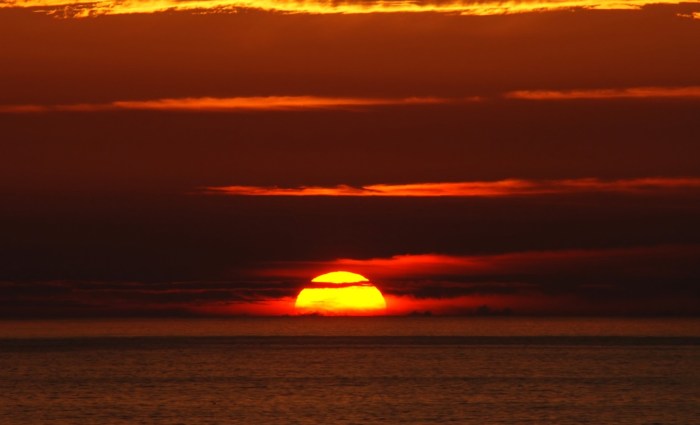
Sunset_2007-1 (2)


Click go the fears, boys,
click, click, click.

In time, terror will flow into you
like ink into a word
and define your life and how others
read you.

In time, beauty will betray you
with a kiss.
And the solstice will seduce you
to sleep in lamplit hallways.

In time, luxury will call you
to defend it;
and love will require you
to answer it.

In time, your voice will leave you;
and the tongue of your past
will utter nothing.

In time, the rim of your lips
will describe formlessness.

The sun will shear off its light.

Terror will become you.

Exile will take you
into its fold.

Click go the fears, boys,
Click, click, click.

Warwick McFadyen